Muscle Preservation
Sustained Energy
Immune Support
Complete Nutrition
Skin & Hair
Electrolyte Balance
Natural Ingredients
Science-Backed
Muscle Preservation
Sustained Energy
Immune Support
Complete Nutrition
Skin & Hair
Electrolyte Balance
Natural Ingredients
Science-Backed
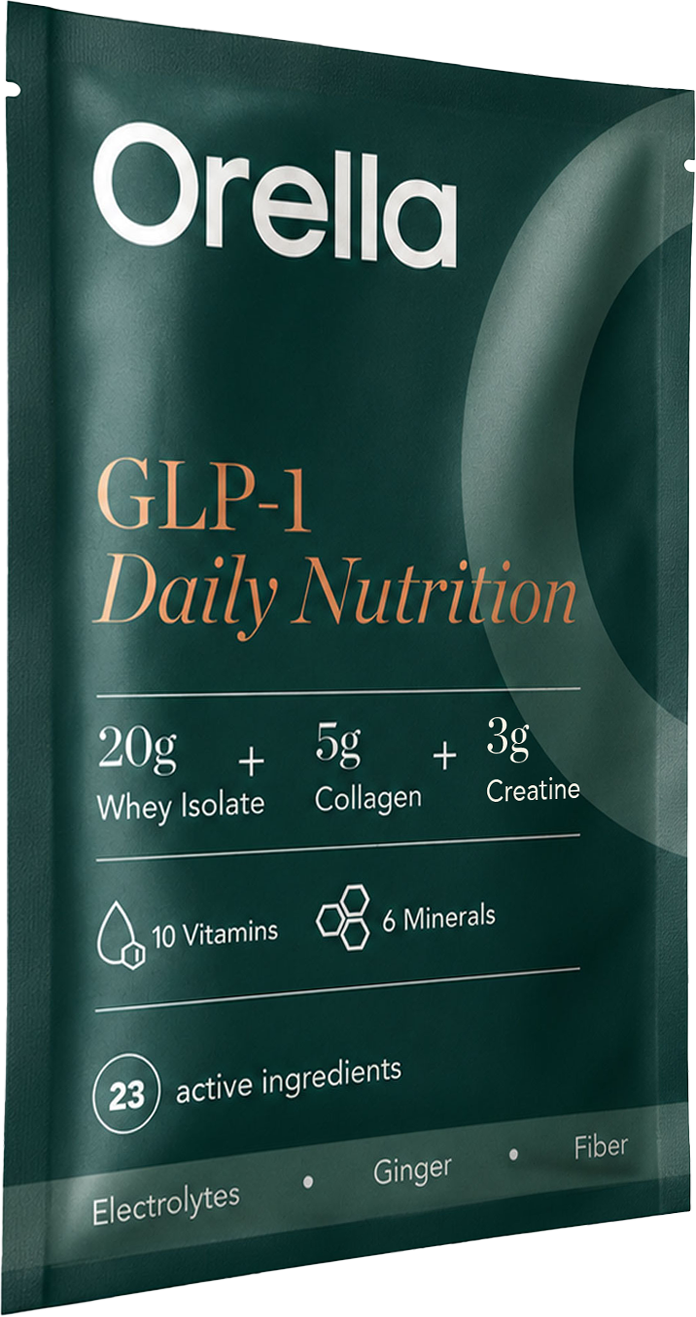
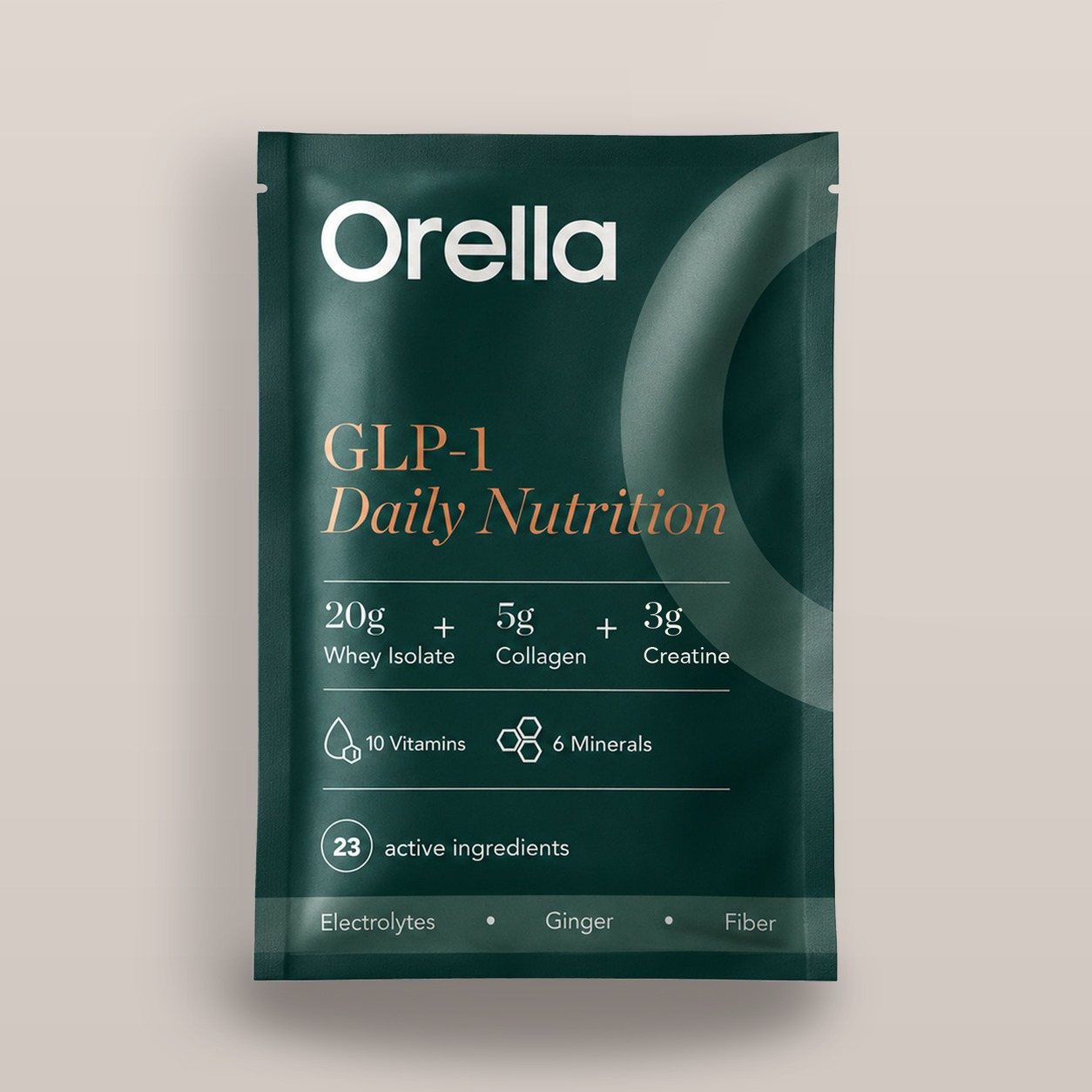
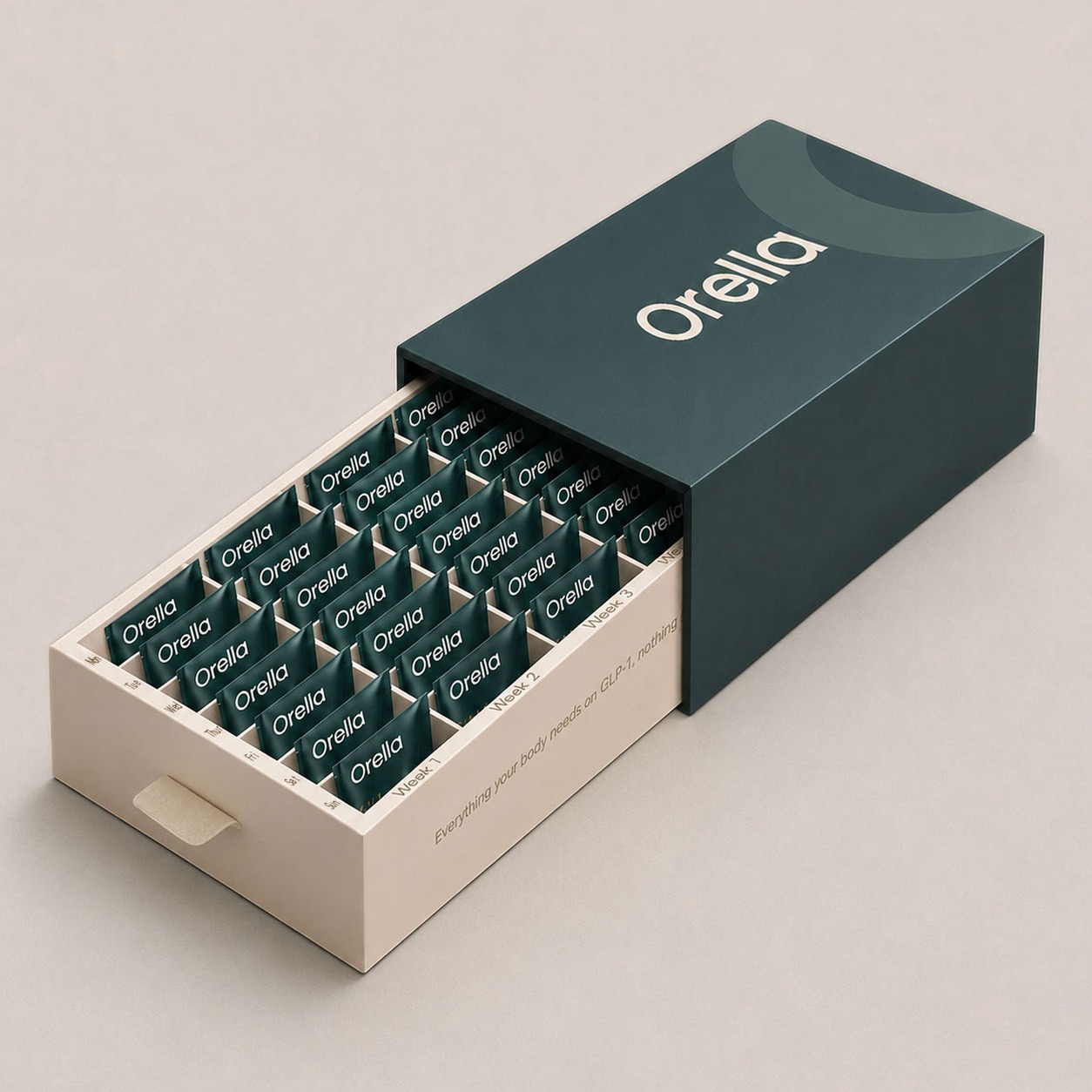
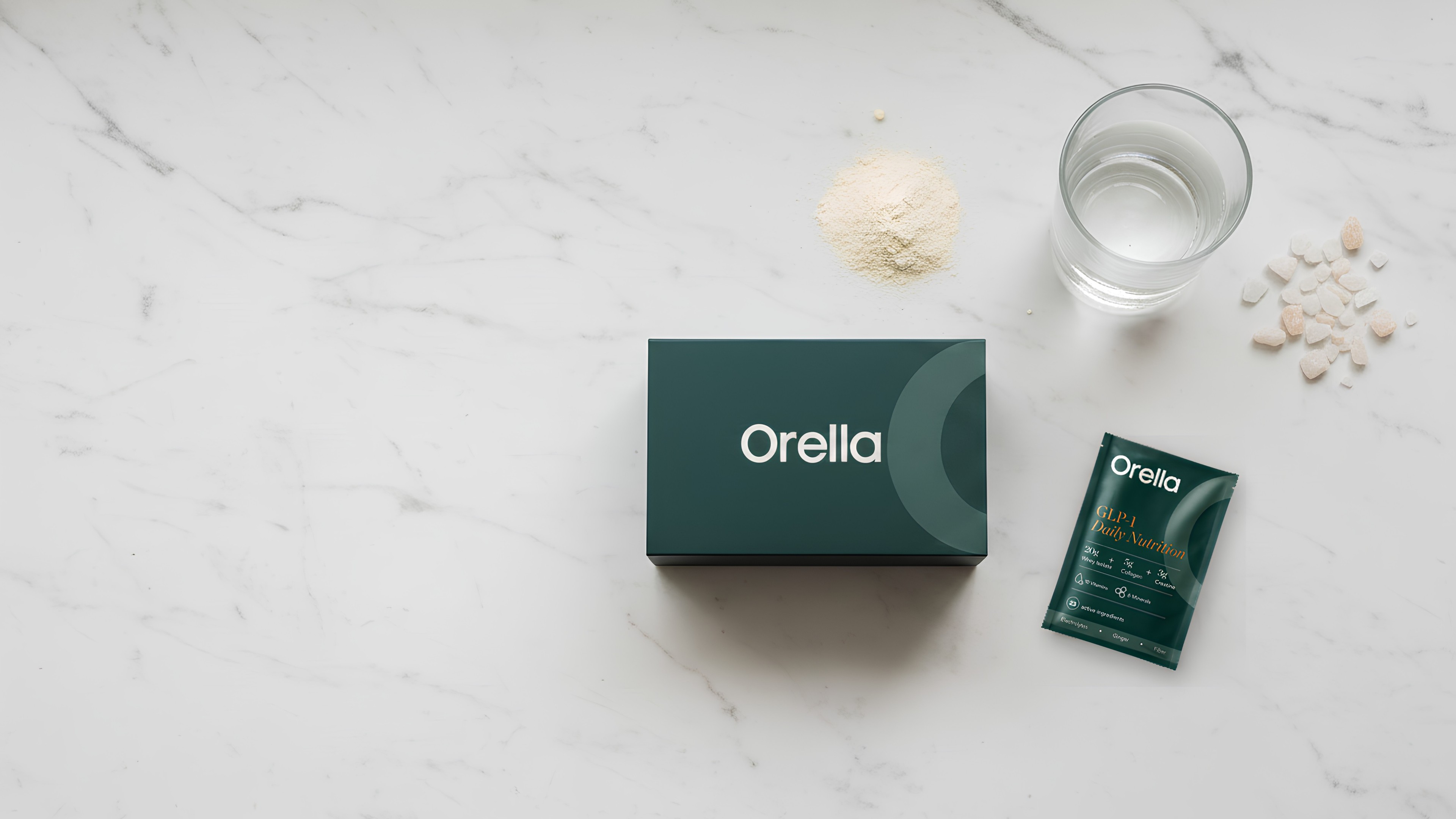
Orella contains 23 essential nutrients formulated specifically for GLP-1 users. One sachet, 30 seconds, complete nutrition.
What Orella does: Delivers full nutrition that preserves muscle, sustains energy, supports immune function, improves skin and hair quality, maintains electrolyte balance, and fills nutritional gaps created by reduced calorie intake.
Five categories of premium nutrition GLP-1 users typically buy separately. All covered by Orella at a fraction of the cost.
* Based on current subscription prices for one premium product per category from comparable DTC and clinical-grade brands.
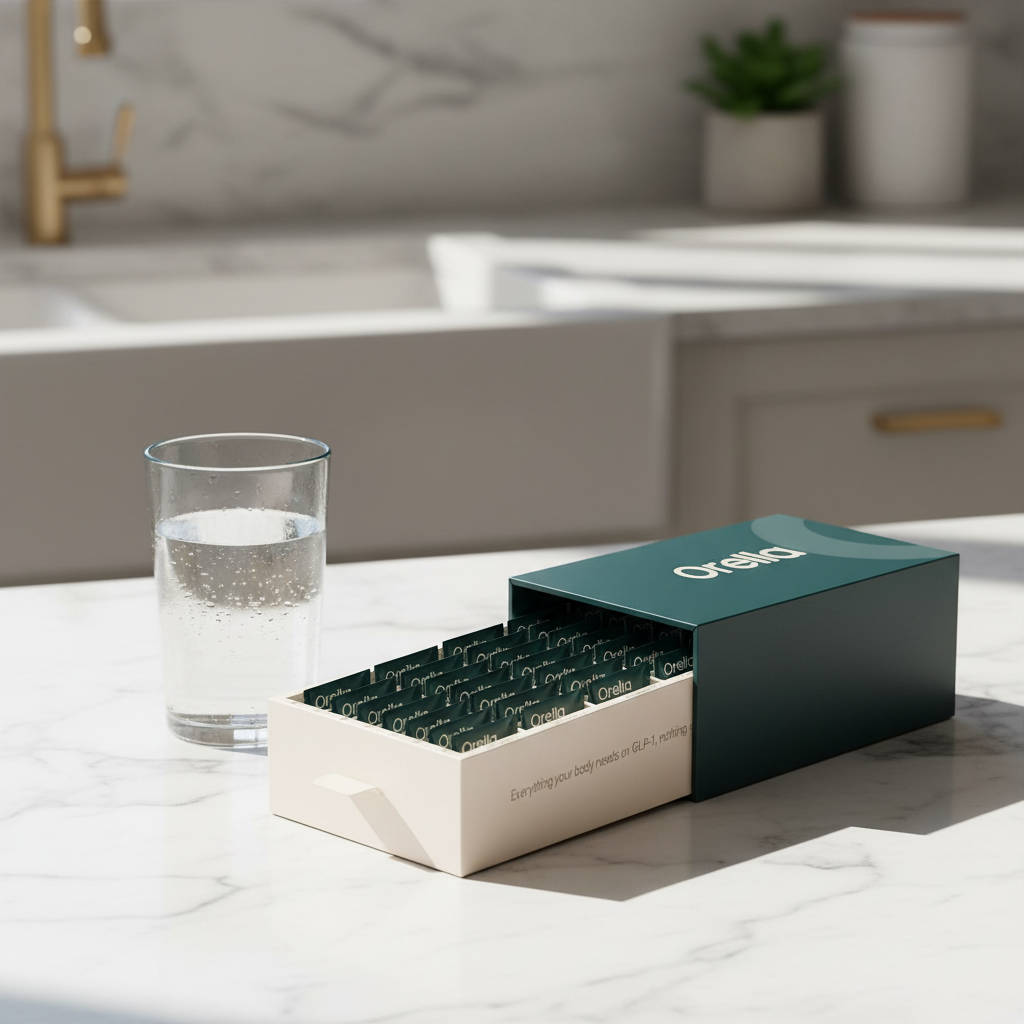
Orella is the solution.
GLP-1 drugs reduce caloric intake by 24–39%, leaving most patients eating well below their nutritional needs.1
Without adequate protein, up to 40% of total weight reduction on GLP-1 drugs comes from lean mass, not fat.2
Over one in five GLP-1 patients are diagnosed with a nutritional deficiency within 12 months of starting treatment.3
The vast majority of individuals prescribed GLP-1s do not currently receive adequate nutritional counselling or behavioural support.4
References
Be the first to know when we launch and get an exclusive discount on your first order.